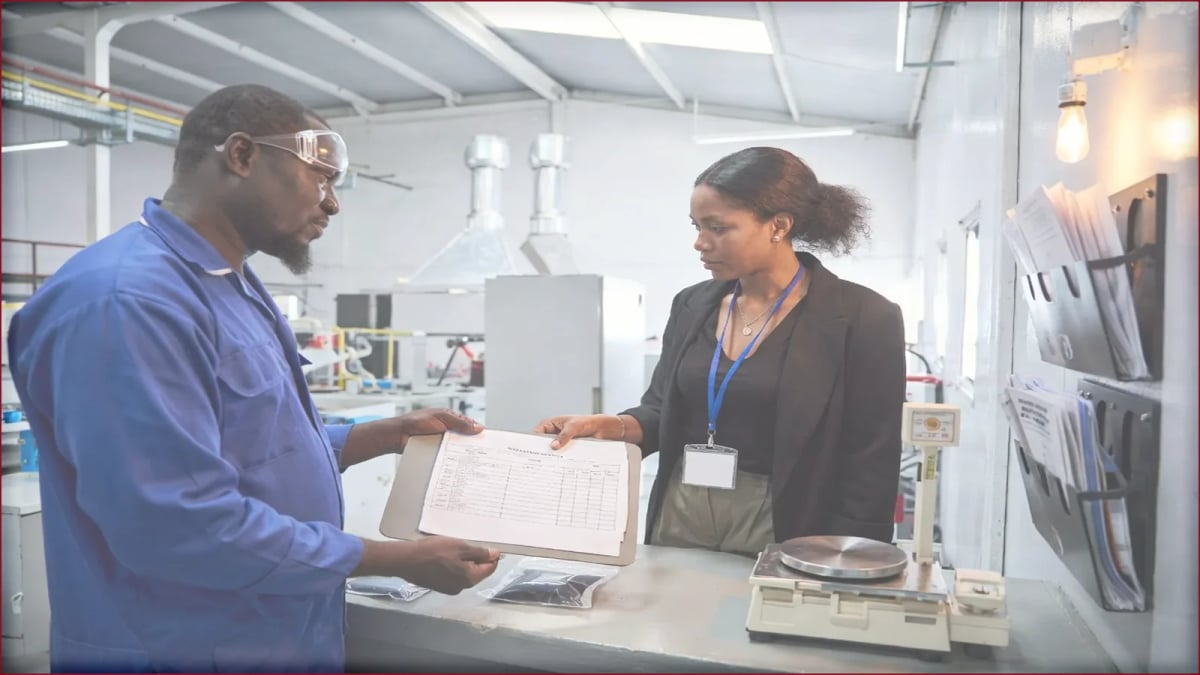
Sourcing and refining coordination for a processing operation
A refinery required structured sourcing of precious metals alongside coordinated refining process management and export-compliance documentation. The Project Office structured an end-to-end process with documentation at each handover.
Project Profile
Sector: Mid-scale precious-metals processing and refining coordination Scope: End-to-end sourcing, chain-of-custody documentation, assay verification, and trade facilitation for a licensed processing operation Corridor: Southern Ghana — Togo cross-border logistics arc Engagement Type: Structured facilitation mandate with documentation oversight at every handover stage
A licensed precious-metals processing operation engaged Kronix Metals to coordinate the sourcing and pre-refinery assay pipeline for an active production cycle. The operation required a facilitation partner capable of maintaining strict chain-of-custody discipline across multiple collection points, consolidating material flows into verified parcel lots, and presenting fully documented parcels to the downstream refinery counterpart — all within the compliance expectations of an institutional-grade transaction.
The Sourcing and Documentation Challenge
What made this engagement technically demanding was not volume alone — it was the multiplicity of origin points.
Material was being drawn from several artisanal and small-scale mining cooperatives operating across different jurisdictions within the Ghana–Togo corridor. Each source carried its own documentation state: some with robust provenance records, others requiring structured gap-remediation before the material could be presented for assay. Any break in chain-of-custody documentation at this stage would disqualify parcels from the refinery’s intake protocol — a commercially material outcome the processing operation could not absorb.
The operation also required assay results to align with refinery intake specifications before physical transfer, eliminating the cost and delay risk of rejected or re-assayed material at the refinery gate.
Approach
Kronix Metals deployed a structured facilitation methodology across four sequential workstreams:
- Responsible-sourcing audit: Each cooperative source was reviewed against the operation’s compliance framework. Where documentation gaps existed, structured remediation was conducted before material entered the consolidation pipeline.
- Parcel consolidation with chain-of-custody tagging: Material from verified sources was consolidated under a single documented custody chain, with handover records maintained at every physical transfer point — collection, transport, consolidation, and pre-assay staging.
- Independent assay coordination: Assay verification was coordinated through a qualified assay facility, with results reviewed against the refinery’s published intake tolerances prior to final parcel presentation.
- Trade facilitation and handover documentation: Kronix Metals prepared the full documentation package — provenance records, assay certificates, chain-of-custody logs, and transfer instruments — enabling a clean handover to the downstream refinery without documentation challenge or intake delay.
Outcome
The processing operation achieved refinery intake acceptance on the first presentation — no re-assay required, no documentation challenged, no parcel rejected. The chain-of-custody record from source to refinery gate was complete and audit-ready. The operation’s compliance team noted the structured documentation package as materially reducing their internal reconciliation burden for the production cycle.
What This Project Demonstrates
Processing operations that draw from multi-source collection networks face compounding documentation risk at every handover point. A single gap — one unverified provenance record, one missing transfer instrument — can suspend an entire parcel at the refinery gate.
This engagement demonstrates that rigorous facilitation, applied early in the sourcing pipeline, converts that risk into a managed process. Chain-of-custody discipline is not an administrative formality in institutional precious-metals trade — it is the structural condition on which downstream transactions are built. Kronix Metals applies that discipline at every stage, ensuring that what arrives at the refinery is not merely material — it is verified, documented, and ready.