
Due Diligence & Chain-of-Custody
Structured due-diligence and chain-of-custody protocols applied across sourcing and trade operations, providing institutional clients with documented verification at every transfer point.
When a compliance team searches for chain-of-custody or due diligence for gold, they are testing whether a handover can survive an audit. Kronix Metals applies structured due-diligence and chain-of-custody protocols across sourcing and trade for institutional clients — documented verification at every transfer point, within Ghana’s GoldBod-regulated framework, since 1992. Arrange a due-diligence review — or discuss a supply partnership: +233 27 000 0844 (Togo / Lomé: +228 96 86 86 75). Institutional partners only.
What is Due Diligence & Chain-of-Custody?
Due diligence and chain-of-custody discipline represents the structural backbone of responsible precious-metals trade. In institutional terms, it is the documented verification process applied at every transfer point — from point of origin through assay confirmation, to final handover — ensuring that each parcel of gold or other precious metal carries a clear, auditable record of provenance, ownership transfer, and material integrity.
Institutional clients — banks holding physical bullion portfolios, refineries accepting raw material, and cooperative mining groups preparing consignments for trade — specify this discipline not as an enhancement but as a prerequisite. Where regulatory scrutiny is high and counter-party confidence is non-negotiable, an undocumented handover is not an acceptable handover.
When to Specify Due Diligence & Chain-of-Custody
Any transaction involving the movement, assessment, or transfer of precious metals across Ghana and Togo requires structured chain-of-custody protocols. The cases are not edge scenarios — they are the operational norm. Refineries receiving material from artisanal and small-scale mining cooperatives require documented sourcing declarations before processing begins. Institutional investors acquiring physical holdings require provenance trails that withstand regulatory audit. Banks facilitating trade-finance instruments tied to physical bullion require verification records that align with counter-party compliance expectations.
Equally, mining cooperatives formalising their export and trade relationships benefit from chain-of-custody documentation as a market-access instrument — demonstrating responsible-sourcing rigour to institutional buyers who would otherwise decline engagement with undocumented supply chains.
Methodology — The Kronix Metals Specialist Approach
-
Counterparty & Provenance Assessment. Before any material enters the trade facilitation process, Kronix Metals conducts a structured review of the supplying entity — their operational documentation, declared origin region, and prior transaction history within the Ghana–Togo corridor. No material advances without this initial layer of verification.
-
Documentation Intake & Record Establishment. All sourcing declarations, licensing references, and regulatory compliance records are collected, reviewed for completeness, and entered into a controlled transaction record. Gaps identified at this stage are resolved before the process continues.
-
Assay Coordination & Material Verification. Physical material is directed to assay under controlled conditions. Assay outputs are cross-referenced against declared specifications, with any variance documented and communicated to all relevant parties before transfer proceeds.
-
Transfer Point Sign-Off. At each physical handover — whether between sourcing party, transport custody, and receiving institution — a structured sign-off protocol is executed. Each transfer generates its own documented record, maintaining an unbroken custody chain from origin to destination.
-
Institutional Reporting & File Closure. On completion of the transaction cycle, a consolidated due-diligence file is prepared for the commissioning client — structured for regulatory review, counter-party presentation, or internal compliance record-keeping as required.
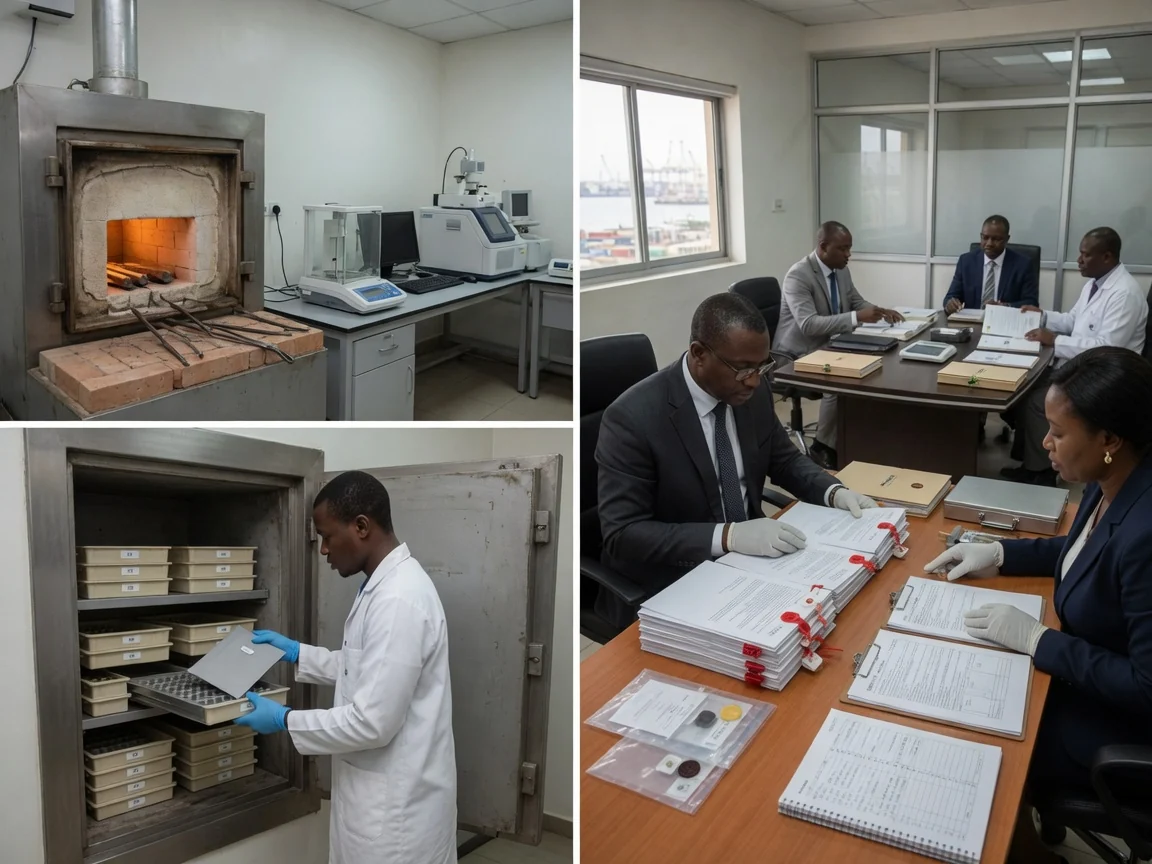
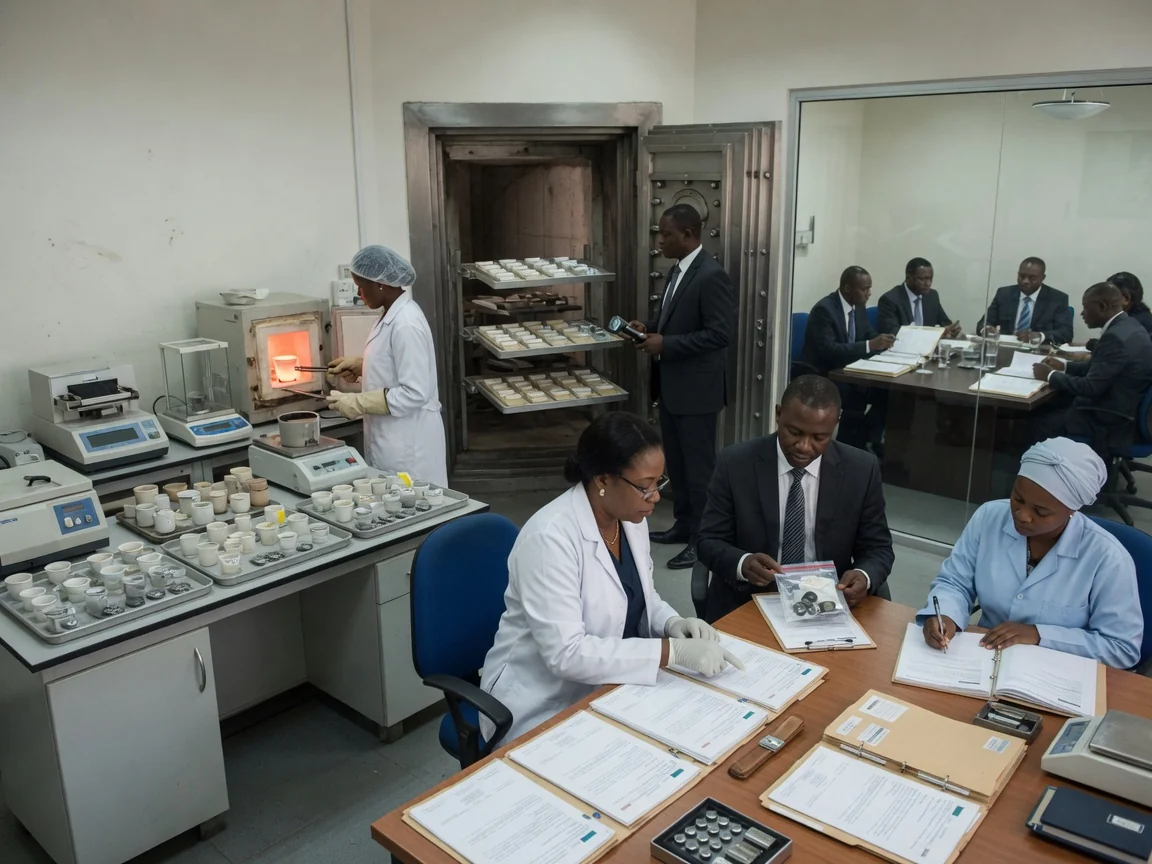

Process Standards & Verification Anchors
- Structured counterparty screening aligned to responsible-sourcing expectations across the Ghana–Togo corridor
- Documented provenance declarations at intake, verified against regulatory licensing and mineral commission records
- Assay coordination with chain-of-custody transfer between custody stages — no undocumented transitions
- Transfer-point sign-off protocols providing discrete verification at each physical handover
- Consolidated institutional reporting files formatted for regulatory, counter-party, and internal compliance use
- Continuous record integrity — documentation is maintained, not reconstructed after the fact
Outcomes for Institutional Clients
Clients who specify Kronix Metals’ due diligence and chain-of-custody protocols receive a transaction record that holds under institutional scrutiny — one that can be presented to a regulator, a board, or a counter-party without qualification. The process removes ambiguity from the provenance question, establishes clear liability demarcation at each transfer point, and positions the commissioning institution as a responsible participant in Ghana and Togo’s precious-metals trade environment.
Markets We Genuinely Serve
We document custody for institutional counterparties in the United Kingdom and major European markets, across Africa, and through the Ghana–Togo (Lomé) corridor and Francophone West Africa — in English and French. We describe only the markets we actually serve; we are an institutional compliance partner, not a retail seller.
Legitimacy & Compliance
- We operate within the Ghana Gold Board Act, 2025 (Act 1140) — under which GoldBod is the national assayer and the sole legal buyer, assayer, and exporter of ASM-sector gold. We work within that framework and do not claim to be GoldBod, to mine, or to be a refinery
- Responsible-sourcing due diligence aligned to the OECD framework, documented provenance, and unbroken transfer-point records — through compliant, documented channels only, never the undocumented routes the trade is sometimes associated with
- Valuation is made against international spot (LBMA / COMEX), never below; an advance fee, escrow demand, below-spot offer, or “guaranteed” parcel is a scam signature we do not engage. No Ghana refinery is LBMA-accredited and we make no such claim
- Institutional partners only — banks, refineries, investors, export houses, mining cooperatives; we do not sell or verify gold for the public
Related Services
- Assaying & Quality Verification — independent fineness verification integrated with custody
- Responsible Sourcing in West Africa — OECD due diligence at scale
- International Gold Trade Facilitation — documented supply to institutional buyers
- Choosing a Legitimate Gold Trade Partner — the diligence checklist